
Commercial Roofing Flat-roof Systems that Protect Your Business.
Commercial and flat roofs have different demands than homes — drainage, foot traffic, rooftop equipment and tight timelines that can’t disrupt your operation. We install and repair membrane (TPO) and flat-roof systems built for durability and proper water management.
From leak repairs and maintenance to full replacement, we work around your schedule and keep the site safe and clean. One local point of contact, start to finish.
- Membrane & flat systems. TPO and flat-roof solutions sized to your building.
- Proper drainage. Engineered so water moves off the roof, not into it.
- Minimal disruption. We work around your business hours and operations.
- Maintenance plans. Catch small issues before they become shutdowns.
Flat and Low-Slope Roofs Are a Different Discipline.
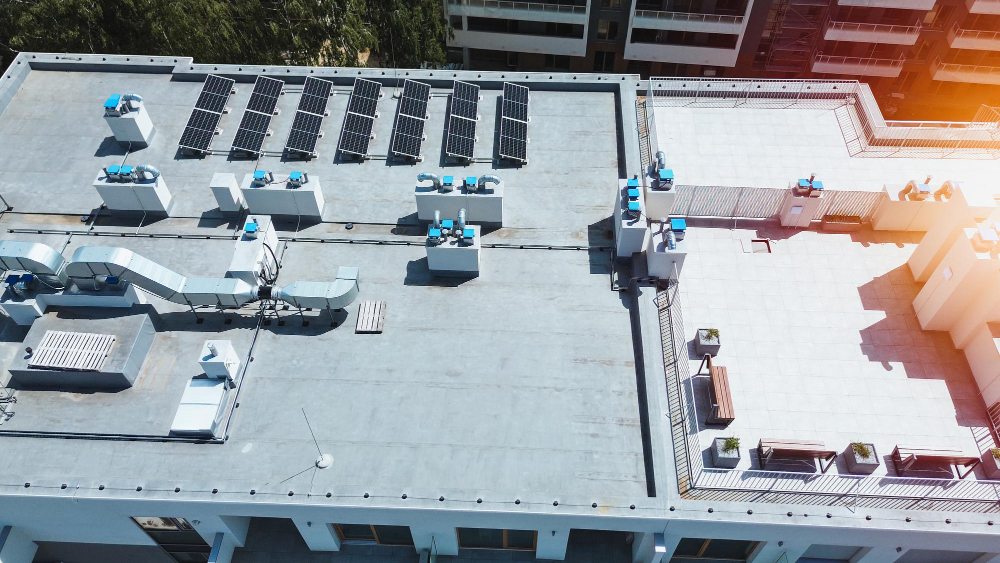
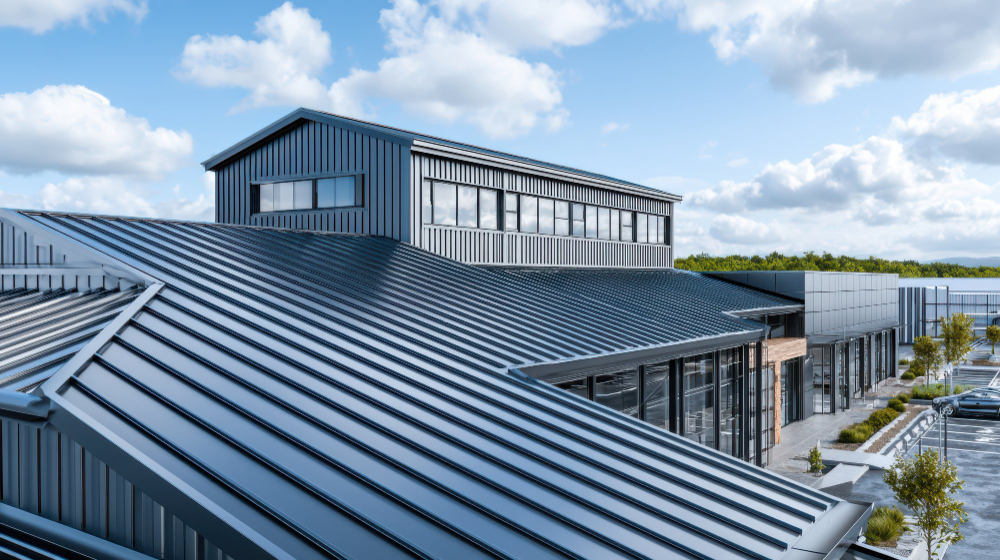
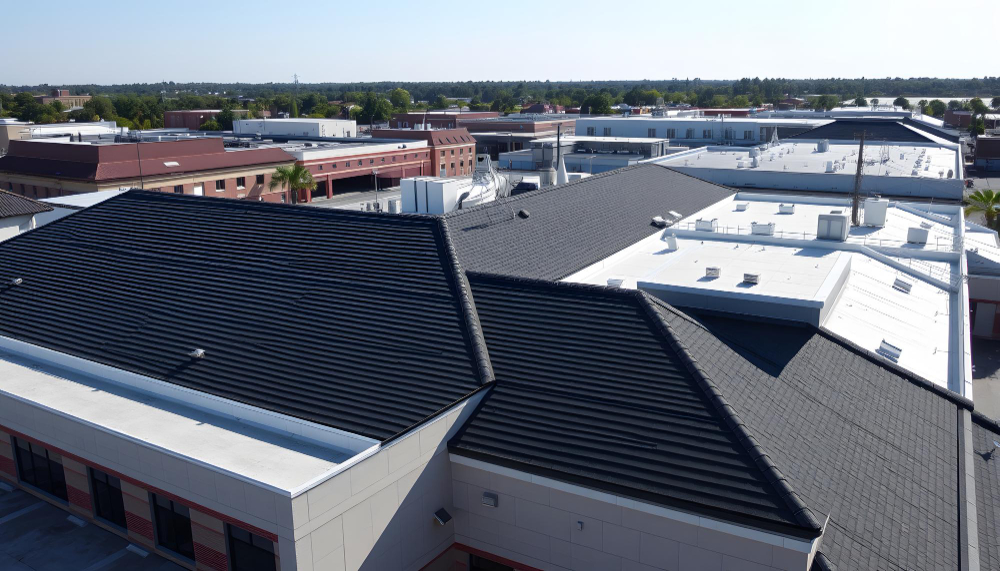
A commercial roof has almost nothing in common with the sloped, shingled roof on a house. Flat and low-slope roofs drain slowly, carry regular foot traffic, and hold up rooftop equipment — HVAC units, exhaust fans, and the pipes and conduit that keep a building running. From storefronts and offices to low-rise multifamily and warehouses, that flat roof is often the single most valuable asset protecting everything and everyone underneath it. When it fails, the damage rarely stays on the roof — it reaches inventory, equipment, tenants, and the ability to stay open. All of which changes how the roof has to be built, inspected, and repaired. A crew equipped for shingles is not the same as one equipped to heat-weld a membrane seam or trace why water is pooling in the middle of your roof. At Kaizen Roofing, we work on low-slope systems across Miami-Dade, and we bring the tools and the diagnostic experience that flat roofs actually demand.
TPO, Modified Bitumen, and Built-Up: Choosing the Right System.
There is no single “best” commercial roof — the right system depends on your building, your budget, and how the roof gets used. TPO is a single-ply membrane with heat-welded seams and a reflective white surface that pushes back Miami’s heat and UV, which makes it a strong, energy-conscious fit for many storefronts and offices. Modified bitumen is a multi-ply, asphalt-based system that stands up well to foot traffic and the regular service work that rooftop equipment demands. Built-up roofing — the time-tested layered “tar and gravel” approach — delivers rugged, redundant protection on the right structure. Each has a place, and the wrong match on a given building tends to show up as premature leaks. And when a roof is aging but still sound, a reflective coating can sometimes extend its service life and buy years before a full replacement is needed. We walk your roof, look at how it drains and what sits on top of it, and recommend the system that actually fits, not the one that is easiest to install.
Drainage, Seams, and Penetrations: Where Flat Roofs Live or Die.
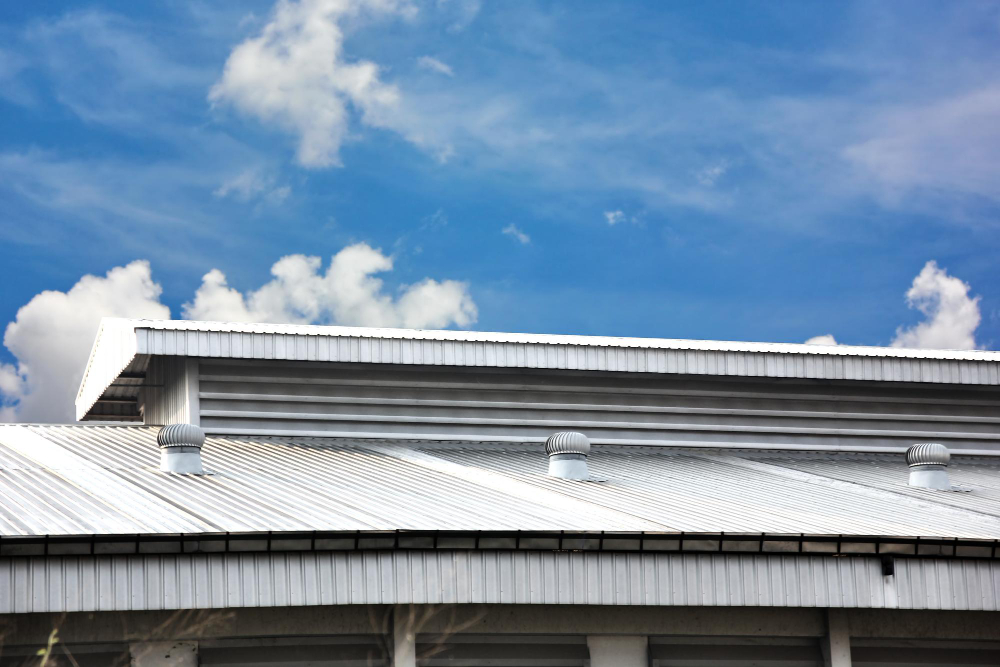
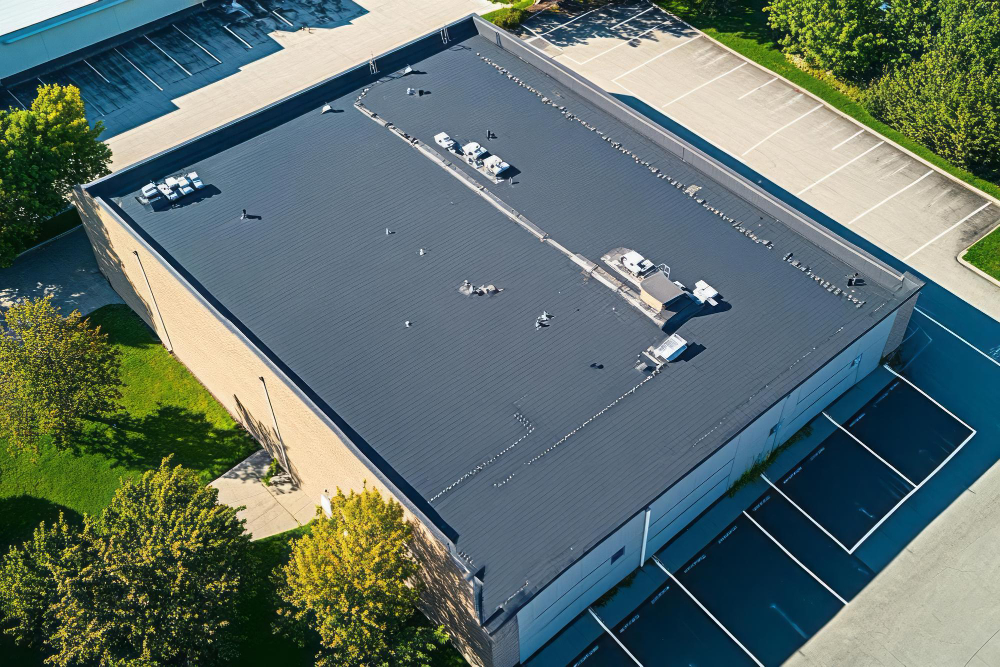
Almost every flat-roof leak traces back to three things: drainage, seams, and penetrations. A low-slope roof is designed to move water toward drains and scuppers, and when that water sits instead — ponding for days after a storm — it adds weight, accelerates aging, and works its way into any weak point. Seams are where membrane sheets join; a properly heat-welded seam becomes a single continuous surface, while a failing one opens a path straight inside. Penetrations — roof drains, scuppers, HVAC curbs, vents, and pipes — along with the flashing where the roof meets parapet walls are the other usual suspects. Add Miami-Dade’s relentless UV and heavy seasonal rain, and small flaws turn into active leaks fast. When drainage is the real problem, we address the slope and the drains rather than just patching the surface, and we diagnose the actual source instead of chasing the stain on your ceiling.
Built for Miami-Dade’s High-Velocity Hurricane Zone.
All of Miami-Dade sits in the High-Velocity Hurricane Zone (HVHZ), and commercial roofing here is held to that standard. Systems and components are expected to carry a Miami-Dade County Notice of Acceptance (NOA) confirming they are approved for our specific wind and impact conditions. That matters for more than passing inspection — it is the difference between a roof that holds through hurricane season and one that peels or fails when a storm finally tests it. Wind uplift is strongest at the roof’s edges and corners, which is exactly why proper edge metal, fastening, and membrane attachment are not places to cut corners. Permitted, code-compliant work also protects you if you ever need to file an insurance claim. As a licensed Florida roofing contractor (FL #RC29027982) based in Cutler Bay, we install to code and use approved assemblies, so the roof over your business is genuinely built for where it stands.
Keeping Your Business Open During the Work
For most businesses, roof work cannot mean closing the doors. We plan commercial projects around your operation — scheduling after-hours or weekend work, phasing the job so one section stays protected while another is replaced, and keeping the site safe for your employees and customers throughout. We also offer preventive maintenance agreements so problems are caught early. Regular inspections keep drains clear, seams sound, and flashing sealed, catching the small issues that cause leaks, interior damage, and unplanned shutdowns before they ever reach that point — and giving you a documented record of your roof’s condition over time. And when a leak does appear between visits, one call reaches the same team that already knows your roof. Whether you need a targeted leak repair or a full replacement, you work with one local, family-run team and one direct point of contact: call or text us at (786) 895-8270, in English or Spanish.